
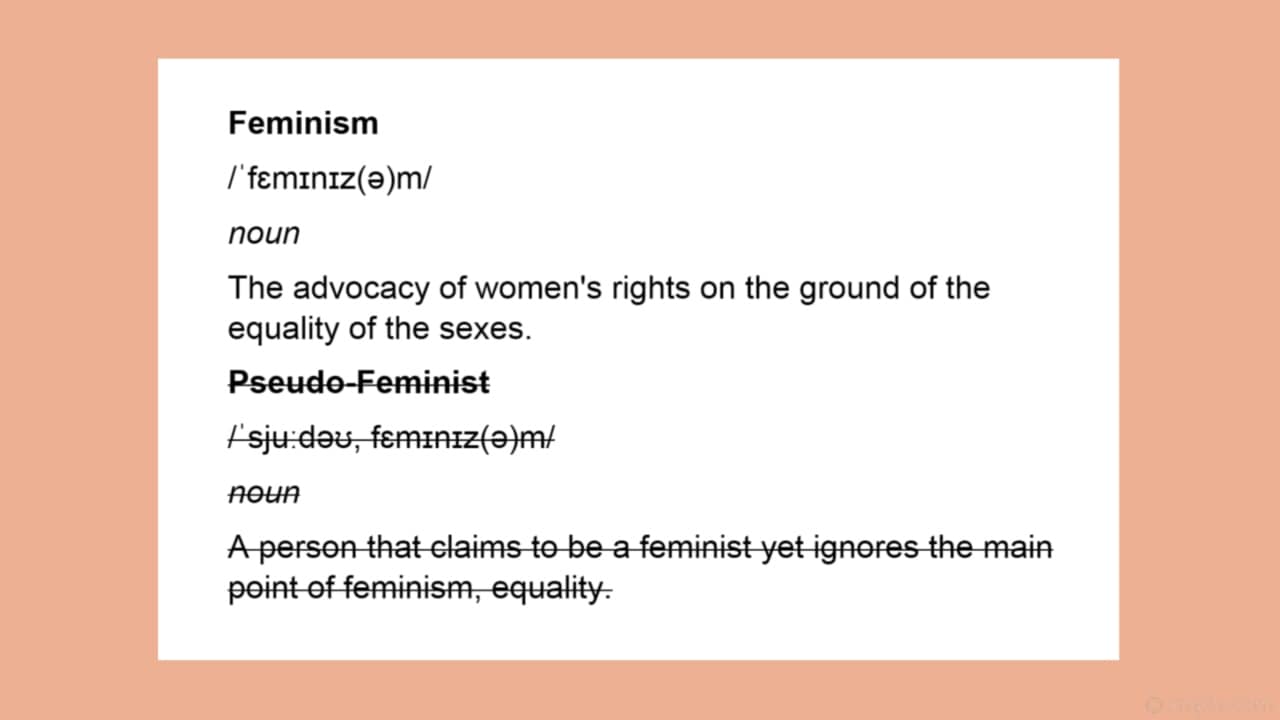
A few bad eggs spoil the basket, in this case, pseudo-feminism is a bad egg, and it tarnishes the true sense of feminism. There is a very thin line between feminism and pseudo feminism. It can be really hard to identify a true feminist and a pseudo feminist. If you are an egalitarian or a true feminist you wouldn’t misunderstand the concept of feminism.
What is Feminism?
Feminism advocates EQUALITY. It basically demands an equally levelled ground in the society, where men and women realise their rights and have equal access to opportunities. Feminism is not misandry; it’s not about hating all men or saying that women are better than men. Feminists don’t want to control the world or put men down.

Women, historically have faced many barriers, been discriminated and in some parts, have also faced religious persecution based on their gender. Feminists across the world work to empower women, remove the gender biases, ensure they get equal rights and strive for their social integration. So basically, anyone who believes in equality for all can be a Feminist.
Need of Feminism in India
- To rid women of male dominance
- Promote equality to sexes
- To ensure women are respected regardless of their career choices
- To end unfounded stereotypes about gender roles
- To stop telling women how to dress
- To end the idea that men need to be stronger than women
Waves of Feminism
The first wave of feminism took place in the late nineteenth and early twentieth centuries, emerging out of an environment of urban industrialism and liberal, socialist politics. The goal of this wave was to open up opportunities for women, with a focus on suffrage. The wave formally began at the Seneca Falls Convention in 1848 when three hundred men and women rallied to the cause of equality for women. Elizabeth Cady Stanton (d.1902) drafted the Seneca Falls Declaration outlining the new movement’s ideology and political strategies. The first wave of feminism was generally propelled by middle class, Western, cisgender and white women.
The second wave began in the 1960s and continued into the 90s. This wave unfolded in the context of the anti-war and civil rights movements and the growing self-consciousness of a variety of minority groups around the world. The New Left was on the rise, and the voice of the second wave was increasingly radical. In this phase, sexuality and reproductive rights were dominant issues, and much of the movement’s energy was focused on passing the Equal Rights Amendment to the Constitution guaranteeing social equality regardless of sex. The second phase drew in women of colour and developing nations, seeking sisterhood and solidarity, claiming “Women’s struggle is class struggle.”
The third wave of feminism began in the mid-90’s. In this phase many constructs were destabilized, including the notions of “Universal Womanhood” body, gender, sexuality and heteronormativity. An aspect of third wave feminism that mystified the mothers of the earlier feminist movement was the re-adoption by young feminists of the very lip-stick, high-heels, and cleavage proudly exposed by low cut necklines that the first two phases of the movement identified with male oppression.
The fourth-wave feminism is a feminist movement that began around 2012 and is characterized by a focus on the empowerment of women, the use of internet tools, and intersectionality. The fourth wave seeks greater gender equality by focusing on gendered norms and marginalization of women in society.
Indian Deities and Feminism
Since a prolonged period, the role of women in society has been subordinate. Women have been the prime victim of patriarchy and toxic masculinity. Feminism is an attempt to get rid of this notion of dominance and subordination, to bring both genders on the same level.
Even before the term feminism was introduced, we had some great feminist icons in our culture and history. Draupadi, a woman born out of the fire, avenged the humiliation meted out to her in the Mahabharata. Durga Maa, an incarnation of goddess Parvati, was created as an amalgamation of all the Gods to destroy evil. Rani Lakshmi Bai and Chand Bibi are other examples of immense courage and power.
What exactly is Pseudo Feminism?
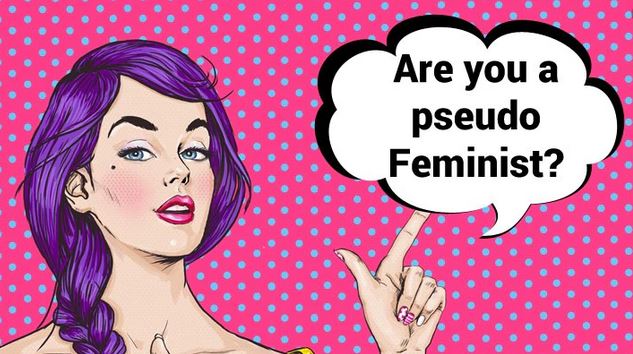
Pseudo-feminism is saying women deserve more respect. Living in a society where women face several problems everyday its worst that some people are actually damaging the word feminism. Do pseudo-feminists really want equality? No, they want to create a world ruled by just woman. A woman should get away with any wrong doing? She shouldn’t just like a man shouldn’t. Pseudo feminism is not about equality and changes the meaning of feminism, it focuses on just giving importance to women and giving the upmost role in the nature.
The main motto of feminism is to focus on equal rights of women whether it be role wise, economically, respect wise, financially and in all the different factors. It is not about being an extremist or a pseudo feminist it is about equality. Nature did not differentiate between genders then why should we?
Here I end my blog series WomEn with a hope that it inspired some women, gave them information about some facts, gave them the confidence to be who they are and felt empowered.
 The Blogosphere