Forbidden to remember, petrified to forget; our brain can do wonders. Dissociative Amnesia can be terrifying. It can lead to forgetfulness regarding stressful events; disruption in consciousness, awareness and personality. An individual might misunderstand the concept of Dissociative Amnesia by replacing it with the hypothesis of Regular Amnesia. They might look like homogeneous in nature but they are two contrasting concepts. Regular Amnesia deals with mislay of details and data from memory, usually as the result of disease or injury to the brain. Amnesia is proven to be often incurable and long-term disorder whereas Dissociative Amnesia holds a different postulation. In Dissociative Amnesia the memories still subsist but are profoundly buried within the person’s mind and cannot be recollected.
Dissociative Disorder is a category in which Dissociative Amnesia is a fragment. Statistics dictate that 1% of men and 2.6% of women fall under the trap of Dissociative Amnesia. It usually transpires when a person attempts to quell certain information, associated with a stressful or traumatic event, leaving them ineffectual to remember important distinctive information. The person who deals with Dissociative Amnesia, the degree of memory loss surpasses normal forgetfulness and includes gaps in memory for long duration of time of the memories involving the traumatic event. Nonetheless, the memories might spring up on their own and also after being triggered by something in their surroundings.

You know that feeling that sprouts up out of nowhere when you see that one person. You forget that the feeling ever existed, however, there it is existed like it had never been gone. Now Dissociative Amnesia is somewhat like that when we replace feelings with memories and person with traumatic events. There is an unforeseen burgeon of a repressed memory when came in contact with a familiar surrounding or an object affixed to that memory.
Dissociative Amnesia causes a blackout of a specific incident which the brain was not prepared to undertake. Thus, it leads to the blackening out of the memory or it can also cause to make a new reality for that situation.
Rationale in the wake of Dissociative Amnesia
Dissociative amnesia has been linked to profuse stress, causing it to be repercussion of traumatic events like war, abuse, accidents, or disasters that the person has weathered or witnessed. A genetic link can also be the reasons to possess dissociative disorders, including Dissociative Amnesia, because people with these disorders sometimes have blood linkage with people who might have had it before in their life time.
For instance, if we talk about the reign of Adolf Hitler, multifarious people had gone under a brutal and unimaginable torture; the kind that miscellaneous unconsciously repressed due to its extreme traumatic effect. A lot of them were rumoured to experience blackouts of the disturbing condition, which can be associated with Dissociative Amnesia.
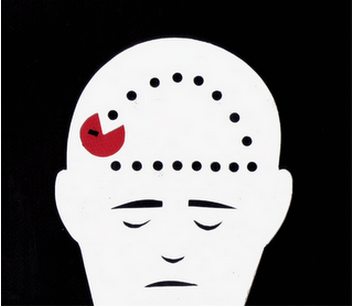
Dissociative Amnesia and its tentacles
A problem cannot be solved until you diagnose it. Diagnosis is not the end but the beginning of the practice. There are plenty of ways to diagnose Dissociative Amnesia and the most customary practice performed by the doctors is by studying the complete medical history of the patient and by performing physical exams.
Diagnostic tests like-
- Neuroimaging
- Electroencephalogram
- Blood tests
Such tests are also carried out to eliminate neurological or other illnesses or medication side effects as the cause of the symptoms.

Treatments for people having Dissociative Amnesia
No individual voluntarily decides to abandon a fragment information and details from their memory. It is the brain’s involuntary retaliation to the trauma as a way to cope up with it. There is nothing that cannot be treated. Dissociative Amnesia is no different. Treatment aims to help the person harmlessly express and undertake painful memories, develop new coping skills as well as life skills. Some treatments are mentioned below-
- Psychotherapy
- Cognitive therapy
- Family therapy
- Medication
- Creative therapies like music, art, dance and singing therapies
- Clinical hypnosis
They say that prevention is better than cure, but in this case, there is no prevention. Dissociative Amnesia cannot be prevented, although it can be treated as soon as the symptoms are visible. Instantaneous intervention after experiencing or spectating a traumatic event can help reduce the plausibility of Dissociative Amnesia.
 The Blogosphere
Very well explained.
LikeLiked by 1 person