
“Don’t go in the kitchen!”
“Don’t touch that utensil!”
“Don’t cook while you are menstruating!”
“Do not go near the worship area!”
“Do not sleep on the mattress.”
“Not allowed to eat along with their families or travel outside the house.”
“Do not offer prayers or touch holy books.”
There is a high level of stigma regarding menstruating women. Some stereotypical myths mentioned above are followed by considerable amount of mass in India. Not only the rural but also the urban population believes in such myths too. In rural communities, women are banished to huts outside their village every time they menstruate. Menstruating women in India hold a curious place somewhere between sanctity and seclusion. It is not just menstruation, but fertility that is considered impure. The underlying basis for this myth is also the cultural beliefs of impurity associated with menstruation. It is further believed that menstruating women are unhygienic and unclean and hence the food they prepare or handle can get contaminated. Culturally in many parts of India, menstruation is still considered to be dirty and impure. Let us know more about the myths and the reason behind them.
Goddess who bleeds
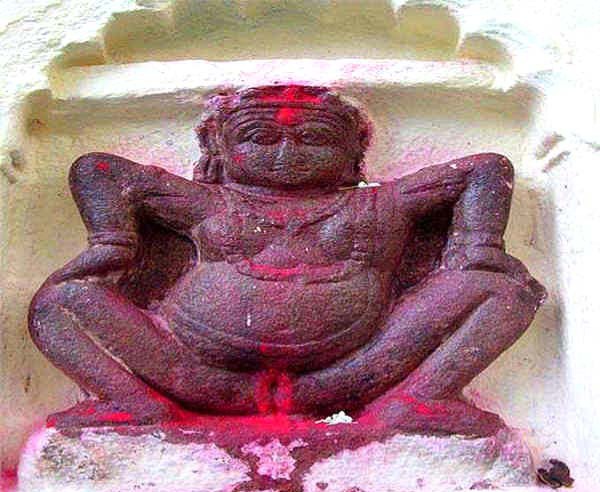
According to the primordial chronicle Kamakhya Devi is revered as the ‘Bleeding Goddess’. Located on the Nilachal hill in the capital city of Guwahati, the deity of the temple Kamakhya.
It is believed that the ‘Garvagriha‘ or the sanctum sanctorum of the temple houses the mythical womb and vagina of the Hindu goddess Sati.
Curiously enough, every year during the month of Ashaad (June), the Brahmaputra river near Kamakhya turns red. It is believed that the goddess ‘menstruates’ during this period.
Considering this to be a woman’s power to give birth, the deity and temple of Kamakhya is a celebration of this ‘shakti’ within every woman.
The story of origin is behind the temple quite interesting. It revolves around the Hindu gods Shiva and Sati.
Legend has it that Sati fought with her husband to be part of the grand yajna that her father was offering to appease the gods—of which both were purposefully not invited to. Paying no heed to her husband’s advice, Sati headed to the yajna nevertheless, only to be insulted by her father. The last straw was when he spoke ill of Shiva as well. Unable to bear the insult, Sati leapt into the very sacrificial fire of the yajna. When Shiva came to know of what had happened, his anger knew no limits. Carrying his wife’s burnt corpse, he went on a rampage with his ‘Tandav‘ or the dance of destruction. While all other gods cowered in fear under Shiva’s rage, it was Vishnu who sent his chakra and cut the body, in order to calm the aggrieved deity.
It is believed that Sati’s body parts fell in 108 locations across the country, which are today known as Shakti peeths.
In a country that continues its archaic attitude towards menstruation as unholy and gruesome, it is important for each one of us to know the progressive approach that the Kamakhya temple displays—of celebrating womanhood.
Why is it irrelevant following the restrictions now?
The four Vedas never state anywhere that a woman’s body is impure or that she cannot do poojas during menstruation. Prohibiting women from entering temples and castigating them as impure is squarely against the teachings of the Vedas.
There may have been restrictions imposed on women in the past but they are purely related to their health. There could be health and security related issues in banning women from Sabarimala that is inside the deep forest but they are irrelevant in modern times. In the Vedic age, there were no restrictions on women to perform rituals. Thousands of women have learned the Vedic rituals under the Kashyapa Ashram in the past two decades and are practicing them every day.
If mahayagna can be performed by menstruating women, there can be no ban on their temple entry during their monthly periods. Menstruation is a natural biological process that need not be considered as an impurity. How many male devotees can vow that they didn’t have nocturnal emission during the 41-day ‘vratha’. All these are biological processes that pose no hurdle in worshipping god. Menstruating women were considered to be having special powers during menstruation, which if not used properly could cause harm to others. In addition, practical reasons of predatory animals smelling the blood in ancient times and coming for the kill, would have led to these women being kept in separate huts to protect the community. All blood, even that in men, has originated from menstrual blood. Menstrual blood in ancient times was considered highly powerful and potent.
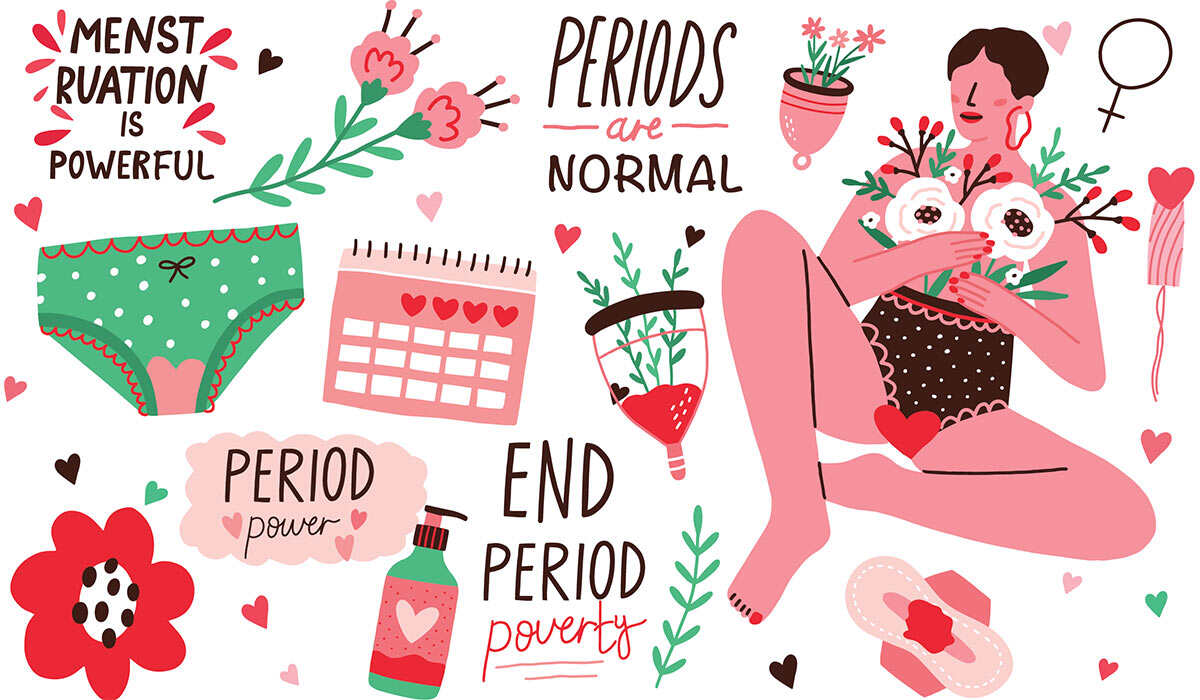
Menstrual cycle is absolutely normal!

It is high time that we understand that Menstruation is a human issue and not only a women’s issue. Equally important it is to know that it concerns hygiene and is not a purity issue. People need to know that menstrual blood is not impure. Just like blood from any other part of the body, once out, this blood too starts decomposing and thus emanates an odor. People need to know and understand that it is a normal physiological function of womanhood. Having periods is not something to be ashamed of. It is a natural procedure where the egg travels through a thin tube called a fallopian tube to the uterus. If the egg is fertilized by a sperm cell, it attaches to the wall of the uterus, where over time it develops into a baby. If the egg is not fertilized, the uterus lining breaks down and bleeds, causing a period. A totally normal biological process should not be kept under the concept of taboo.
Actions which can be taken to normalize menstruation process:
1) Make menstruation related programmes comprehensive, providing complete information on menstruation, menstrual hygiene, product basket available, disposal and treatment, and equip girls and women with the self-confidence and self-efficacy needed to address harmful socio-cultural norms.
2) Build capacity of functionaries at the district level and below with streamlined and comprehensive messaging.
3) Include relevant influencers – boys and men, frontline health workers, educators, health care providers, religious and political leaders in such conversations and programming.
4) Increase positive reporting about this on media, addressing taboos and the reasons behind them.
Periods have had certain restrictions and mythical beliefs but it is proven that it was meant only for the ancient times and it is not relevant to follow it right now. It is not a taboo and it is high time we stop looking it as one.
Link showing my point where I referred to vedas:
Vedas don’t portray menstruating women as impure. Why …
https://www.dailyo.in
 The Blogosphere
Well done
LikeLiked by 1 person
Very true. Menstrual cycle is not a taboo and people should open up for the same. We should not be a shamed to discuss this topic and indeed respect the nature and accept it, as without menstruation cycle we are not able to get any kid in our society and family.
LikeLiked by 1 person
Super concept, much needed
LikeLiked by 1 person
So agree
LikeLiked by 1 person
This blog is really informative!!❤️
LikeLiked by 1 person
Excellent myth buster. Must read for those who would want a holistic approach towards this social issue.
LikeLiked by 1 person